
Humane League – How and why turkeys are farmed
Factory farming involves confining high numbers of farmed animals within the smallest spaces possible in order to maximize profits. Many turkey farms are factory farms. Every aspect of a turkey’s life is entirely controlled by humans, from when they breed, to how fast they grow, to where they live. Factor farming transforms turkeys from curious, independent birds into commodities for human consumption.

A Day in the Life of a Factory Farm Turkey
The life of a factory farm turkey can only be described as a horror story. As you’re preparing for Thanksgiving, consider the following before you head off to the grocery store to pick out your bird:  Read more

Animal Corner   –  Turkeys
A Journey Through the Life of These Incredibly Quick Little Learners

Turkey farming in Canada – The life of a farmed turkey
In B.C. and the rest of Canada, most turkeys are raised indoors in climate-controlled barns. Turkeys are not kept in cages – it is standard practice for turkeys to be raised free-run, meaning they can roam throughout the barn. Some turkey farms may provide access to the outdoors, also known as free-range housing.

Humane Food – Turkeys
There are eighteen million turkeys in Canada intensively reared for food. They’re bred to grow rapidly to their full weight in the shortest time in the least amount of space. They are housed with thousands of other birds with no natural light and poor ventilation. They are in extremely crowded, barren environments. By the time they are slaughtered, each bird has two square feet of space and the barns become increasingly crowded as they grow.  Read more

Farm Sanctuary  –  Turkeys


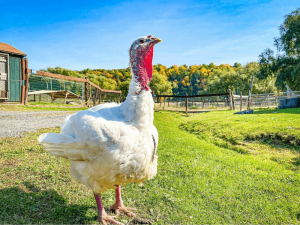
We dream of sunshine and freedom ….


but this is our reality
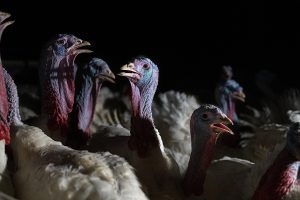
The turkeys at this farm are genetically bred for the plate. They are substantially heavier than their wild counterparts, can no longer fly, and hobble awkwardly under their weight. The turkeys do not get to walk much at all, as their density in each barn allows them little room to move about.

Credit: Jo-Anne McArthur / We Animals 

The turkeys at this farm are genetically bred for the plate. They are substantially heavier than their wild counterparts, can no longer fly, and hobble awkwardly under their weight. The turkeys do not get to walk much at all, as their density in each barn allows them little room to move about.

************************

Turkeys
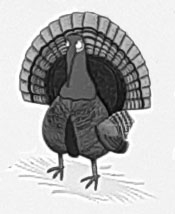
Turkeys have a natural lifespan of up to 10 years
Wild Turkeys can fly up to 55 miles per hour for short distances
Contrary to popular myth turkeys are intelligent, social animals, they like to play and have a large vocabulary, they recognise each other by their voices and individual features.
Turkeys have extremely good eyesight and hearing
M
ale turkeys, also known as toms, make a distinct gobbling sound to attract females during mating season. Interestingly, their gobbling can be heard from a mile away!