
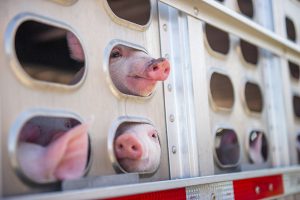
Two young piglets in search of fresh air poke their noses out of the sides of a transport trailer. These young animals do not know they will be transported for more than five hours from Quebec to Toronto, Ontario. . Julie LP / We Animals
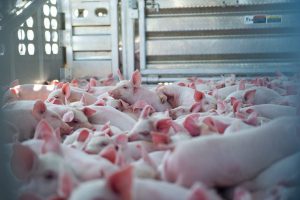
An anxious piglet sits inside a transport trailer, fear outweighing the need for sleep. 6000 piglets are being transported inside this trailer to another farm due to a lack of space at the initial site. Quebec Canada. Credit: Julie LP/We Animals Media.
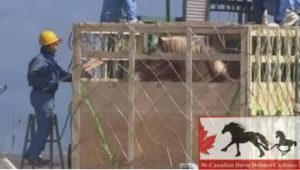
Canadian Horse Defence Coalition
Horse Transport
An animal transport truck arrives at an airport. It is one of five that evening, carrying horses that will be moved into crates and onto a plane destined for Japan, where they will be slaughtered to become sashimi. The plane was not scheduled to leave until hours later the following morning. Edmonton International Airport, Edmonton, Alberta, Canada, 2024. Jo-Anne McArthur / HSI Canada / We AnimalsDescription: Air shipments of live horses destined for slaughter in Japan occur regularly throughout the year from three Western Canadian airports, including this one in Edmonton, Alberta. According to Canadian Food Inspection Agency (CFIA) reports, more than 2,500 live horses, one to three years of age are exported to Japan annually, with each flight carrying approximately 100 animals. CFIA regulations allow a maximum journey of 28 hours without feed, water, or rest, from the time of loading at the farm or feedlot to offloading at the destination, yet some journeys have reportedly lasted over 32 hours. After leaving the feedlot, the horses spend several hours in transport trailers before being unloaded at the airport, inspected, and reloaded into shipping crates. Three or four horses are crowded into each crate, with no room to turn around or lie down. Then the crates are covered with netting that can restrict the horses’ heads or other body parts that may protrude from the small crates. The horses are loaded onto a cargo jet for departure several hours later. On this occasion, workers at Edmonton International Airport prepared empty crates in the late afternoon for the arrival of five semi-trucks filled with horses. The trucks began arriving around 8:30 PM to load the horses onto a flight departing for Japan at 6:00 am the following morning. The horses waited inside the trucks on the tarmac for several hours before being unloaded into an inspection building. Though obscured from view, their whinnies and stamping feet were audible from the public roadside over 200 meters away. Even before the trucks’ arrival, intense security was present, actively hindering attempts to document or observe the shipping process and blocking publicly accessible areas. Horses were still only at the beginning stage of unloading at 11:30 PM, hours before their impending 10 to 12-hour flight to Japan. These flights routinely stop to refuel in Anchorage, Alaska, subjecting the horses to further trauma and risk of injury during this extra takeoff and landing.