
Farm Animal Transport
Dogs trapped in cars on a hot day. We hate to see it and we get upset and annoyed when we do – we call the police or run into the mall to call security or we illegally break open the car in an attempt to release the animal. Leaving pets in a car on a hot day is against the law in many areas. Many cars now have temperature control which keeps the car and our pets cool for a short time.
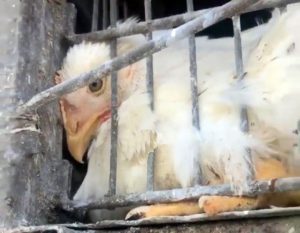
But some animals aren’t so lucky. Farm animals in Canada are allowed to spend hours in the scorching heat with no water. Chickens for 28 hours, 28 hours for horses and pigs, 72 hours for day-old chicks and 36 hours for all other animals
Why do we pamper some animals and ourselves but ignore the plight of others?
We are all sentient beings with the same feelings. Is it because ‘they are going to be killed anyway so it doesn’t matter?’ Or is it ‘out of sight, out of mind’?
Check out this video from Canadian Coalition for Farm Animals – Creature Comforts. You will see better choices for transportation at the end of the film.
Perhaps it’s ‘I can’t do anything about it so I don’t want to know’. But can we? If we have the courage to look through the window and see and empathize, perhaps we can try to change the system.
Email the Minister of Agriculture and Agri-Food and request that animal transport times are still too long and also request that consideration is given for hot and cold temperatures. Also write to your own MP requesting improved transportation times and conditions.
Take a few minutes to empathize with the animals forced to endure these conditions.
The Horrors of Animal Transportation
**************************
When you talk to people about farm animal welfare, most people say that they care about how animals are raised for food, but they don’t want to have to choose between higher welfare and ‘cheap meat’.
Many animal rights activists will simply say ‘go vegan’, but the vast majority of folks have no plans to give up meat and dairy.
What many people will look for are products that promote animal welfare, but what do labels mean and can they be trusted? For example, labels like ‘all natural’ and ‘humanely raised’ are meaningless.
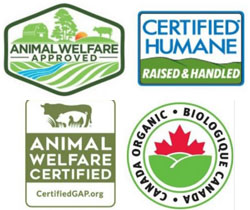
In Canada, higher welfare labels include:
Certified Humane
Humane Farm Animal Care certification – the goal of the program is to improve the lives of farm animals by expanding consumer awareness, driving the demand for kinder and more responsible farm animal practices.
Certified Organic
Animals are not given growth hormones and antibiotics are restricted and only given when the animal is unwell in which the meat cannot be labeled as organic.
Certified Animal Welfare Approved (AWA)
Animal Welfare Approved guarantees animals are raised outdoors on pasture or range for their entire lives using sustainable, high-welfare farming practices.
Animal Welfare Certified – Global Animal Partnership (GAP)
GAP has five levels or steps with each level increasing the welfare of the animal. Fist level
No cages crates or crowding. Second level enriched environment. Third enhanced outdoor access. Fourth pasture raised. Fifth, no physical alterations. Five plus the animals have lived their life on the same farm. https://globalanimalpartnership.org/certified-gap
Find more information from the World Animal Protection website.
Switzerland now has mandatory labels with regard to how the animals are raised, such as whether the animals have been subjected to painful procedures without anesthesia. Other european counteres are following, such as a grading system for hens’ living conditions.
Perhaps one day the world will “go vegan,” but until then, the best we can do is ensure that farm animals, as far as possible, can live healthy, natural lives—following their instincts, engaging in natural behaviours, and remaining free from pain and suffering.